Engineering-oriented CNC machining support

Aluminum vs Stainless Steel for CNC Machining

A practical buyer guide comparing aluminum and stainless steel for CNC machined parts, including weight, strength, corrosion resistance, machinability, finishing, tolerance review, and common part types.

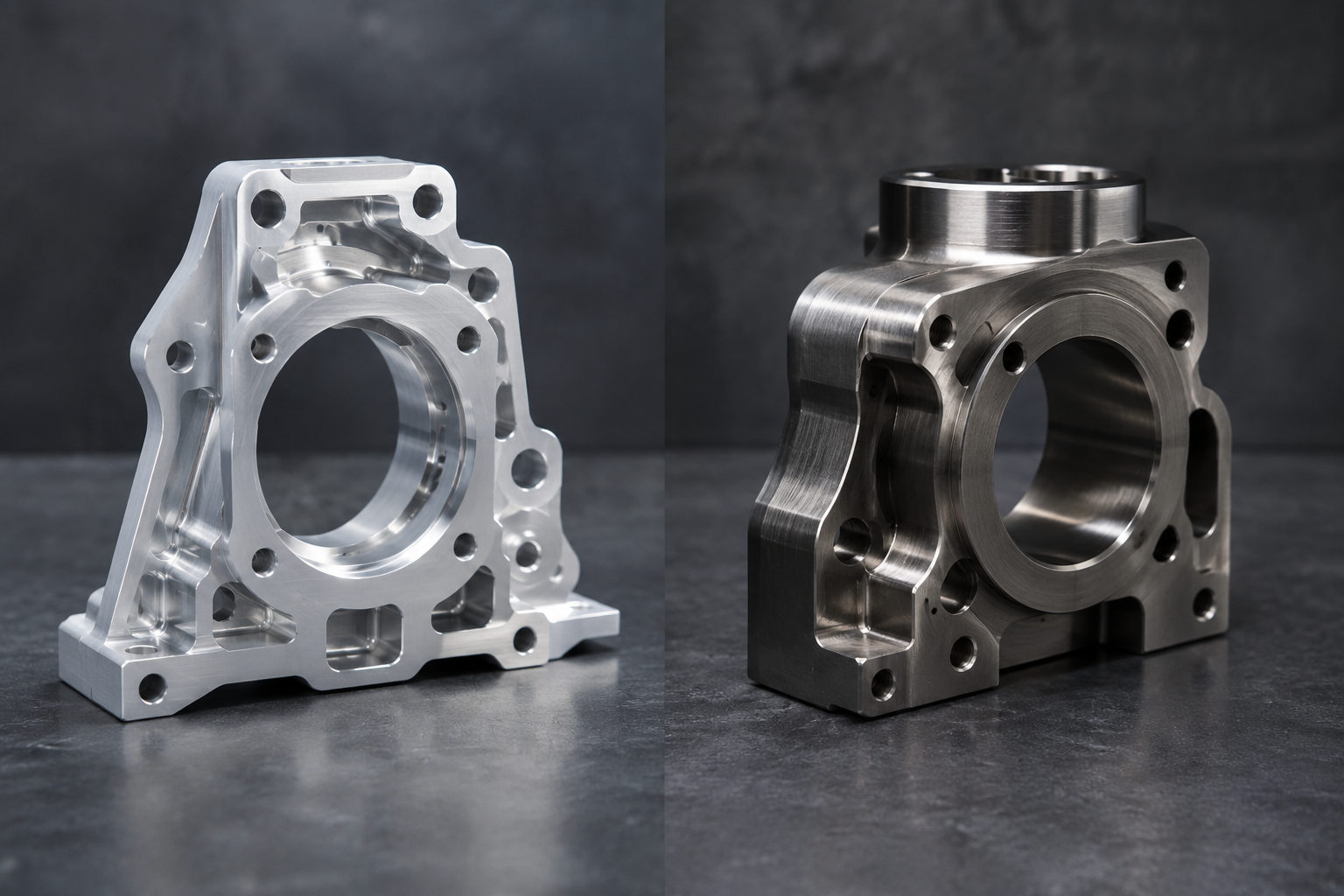
Aluminum and stainless steel CNC machined parts shown side by side

Buyer comparison guide

Choosing Between Aluminum and Stainless Steel

Aluminum and stainless steel are both common CNC machining materials, but they are used for different reasons. Aluminum is often selected for lightweight housings, brackets, plates, covers, fixtures, and parts that need efficient machining or anodizing. Stainless steel is often selected for strength, durability, corrosion resistance, shafts, sleeves, bushings, fittings, and more demanding mechanical use. The right choice depends on function, load, weight, environment, finish, tolerances, inspection needs, and quantity.

Quick comparison

Aluminum vs Stainless Steel CNC Machining Comparison

FactorAluminumStainless Steel
WeightLower weight, useful for housings, brackets, covers, and moving assembliesHeavier, useful when strength and durability matter more than weight
MachinabilityUsually easier to machine, especially for milled pockets and complex featuresMore demanding to machine, often requiring closer review of tool access and finish
Strength and durabilitySuitable for many industrial components but not always enough for high-load or high-wear partsBetter for many shafts, sleeves, fittings, pins, bushings, and durable mechanical parts
Corrosion resistanceCan be improved with anodizing or other finishingOften selected when corrosion resistance is a key requirement
Surface finishingAnodizing, hard-coat anodizing, powder coating, laser marking, deburringDeburring, passivation where applicable, polishing, marking, and suitable finishing
Typical partsPlates, housings, brackets, fixtures, covers, spacers, tooling componentsShafts, sleeves, bushings, pins, fittings, brackets, precision components

Material decision

Key Differences for CNC Machined Parts

Weight and Strength

Aluminum

Best when weight reduction, easy handling, complex milled features, or lighter equipment components matter.

Stainless Steel

Better when strength, durability, thread performance, wear resistance, or demanding mechanical use matters.

Corrosion and Environment

Aluminum

Can work well in many industrial environments, especially with anodizing or suitable finishing.

Stainless Steel

Often preferred when corrosion resistance, moisture exposure, cleaning, or long-term durability is important.

Machinability, Cost and Lead Time

Aluminum

Usually easier to machine and often practical for pockets, slots, plates, housings, and complex milled features.

Stainless Steel

Requires closer review of tool wear, heat control, surface finish, and inspection requirements.

Surface Finishing

Aluminum

Commonly paired with anodizing, hard-coat anodizing, powder coating, deburring, and laser marking.

Stainless Steel

May require deburring, polishing, passivation where applicable, marking, or controlled machined surfaces.

Selection guide

When Each Material May Fit

Choose Aluminum When...

  • Low weight is important
  • The part is a housing, bracket, fixture, cover, plate, spacer, or tooling component
  • Machined pockets, slots, and complex milled features are required
  • Anodizing or a clean machined appearance is needed
  • The strength requirement is moderate and suitable for the design
  • The project benefits from efficient machining

Choose Stainless Steel When...

  • Strength and durability are more important than weight
  • The part is a shaft, sleeve, bushing, pin, fitting, or precision round component
  • Corrosion resistance is important
  • Threads, fits, or contact surfaces need stronger material behavior
  • The part operates in a more demanding mechanical environment
  • Inspection of critical diameters or fits is important

Material review RFQ

RFQ Information Needed for Aluminum vs Stainless Steel Review

Files

  • 2D drawings
  • 3D CAD / STEP files
  • Drawing revision if applicable

Material Decision Details

  • Aluminum or stainless grade if known
  • Open material question
  • Strength / weight / corrosion concern
  • Surface finish or coating requirement

Project and Inspection Details

  • Quantity
  • Critical dimensions
  • Fit or mating part information
  • Inspection report needs
  • Delivery destination and target lead time
Review Your Material Choice

Need Help Choosing Between Aluminum and Stainless Steel?

Share your drawings, CAD files, part function, material question, quantity, finish, tolerance requirements, inspection needs, and delivery details for material review before quotation.

Review Your Material Choice